 en
en العربية
  Türkçe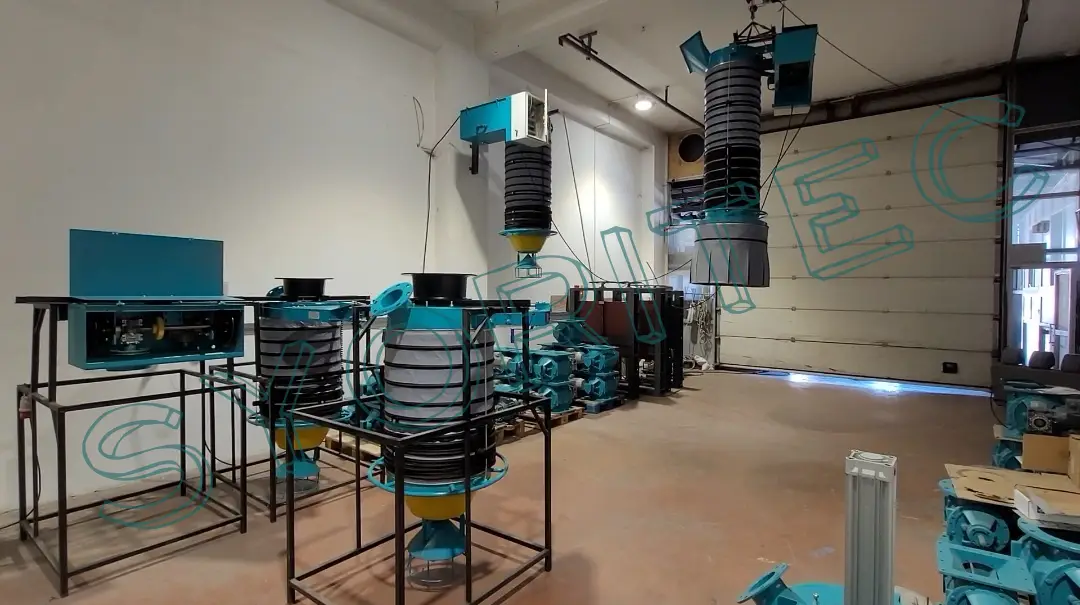
Loading Bellows
Silobas Loading System – Operating Principles and Industrial Applications
General Description
The Silobas Loading / Filling Chute is used to fill bulk material tanker trucks (Silobas) with dry powders, granules, and fine bulk solids.
It can be fed from storage silos, mechanical conveying systems, or pneumatic transfer systems to ensure clean, safe, and efficient loading without dust emission or contamination.

Silobas Filling Method from Storage Silos
- A Silobas is a specialized bulk tanker designed for the safe and economical transportation of powdered or granular materials such as:
-
Cement - Lime - Plaster - Calcite - Silica sand - Food products - Plastic raw materials - Hazardous and non-hazardous bulk solids
- Silobas tanks are manufactured in different configurations (V-Type, W-Type, Extreme, and Tipper Silobas) depending on the product characteristics and capacity.
Filling Procedure
The Silobas truck positions itself next to the storage silo.
-
The operator connects the Silobas discharge hose to the silo loading pipe.
-
The onboard compressor pressurizes the Silobas tank compartments.
-
After reaching the required pressure level, the inflation valve is opened.
-
The compressed air pushes the material through the transfer pipeline into the silo.
-
The jet pulse filter mounted on top of the silo separates air from the incoming material.
-
The bulk material is transferred safely into the silo with zero dust emission.
Operating Principles of the Silobas Loading Chute
- The Silobas Loading Chute is a flexible and telescopic system that extends vertically until it sits tightly on the tanker’s loading hatch.
How the System Works
-
The chute extends downward until the conical outlet seals with the Silobas inlet.
-
A rope tension sensor stops the chute’s downward movement upon contact.
-
The polyurethane sealing skirt around the cone prevents dust leakage.
-
Flow-control valves open to allow material to enter the Silobas tank.
-
Level detection sensors (flag sensors, rotary sensors, or motor-driven sensors) monitor the filling process.
-
Once the tank reaches the desired level, shut-off valves (Butterfly, Slide Gate, Rotary Valve) close the material flow.

Silobas Loading Chute Control System
- The chute is controlled through a central control panel, and may operate:
-
Manually
-
Remotely (handheld remote)
-
Fully automatically
Control Functions
-
Up / Down movement
-
Material flow control
-
Monitoring Silobas filling level
-
Activation of internal dust collection system
-
Signaling or activation of external dust collector or discharge valve
Dust Management During Silobas Filling
The loading chute consists of:
-
Outer casing
-
Inner casing
-
Wear-resistant cone
-
Material flows through the cone by gravity.
Meanwhile, a built-in dust extraction system between the inner and outer casings removes dust generated during loading.
Dust Extraction Options
-
Integrated filter models: Dust is separated via bag or cartridge filters and transferred back into the Silobas.
-
Non-filter models: Dust is removed via an external dust collector.
Feeding Systems for the Silobas Loading Chute
The loading chute can be supplied from many industrial sources, including:
-
Outlet of steel or concrete storage silos
-
Under ESP (Electrostatic Precipitator) filters
-
Under bag or cartridge jet-pulse filter hoppers
-
Screw conveyor discharge points
-
Belt conveyor discharge points
-
Pneumatic conveyor chutes
-
Bucket elevator or chain conveyor discharge
-
Cyclones or pneumatic cooling systems
-
Screw feeders connected to Big Bag unloading stations
-
Vehicles Compatible with Silobas Loading Chutes
The system can fill various vehicle types, including:
-
V-Type and W-Type Silobas
-
Extreme and tipper Silobas
-
Container Silobas
-
Feed silos
-
Flour silos
-
Closed truck bodies and wagon containers
-
Material Flow Control Equipment
Material flow is controlled using:
-
Manual and mechanical slide gates
-
Manual or hydraulic butterfly valves
-
Rotary valves / airlocks (electrically or hydraulically driven)
-
Screw conveyors
-
Pneumatic or hydraulic slide gates
Materials Commonly Loaded Using Silobas Systems
Cement, raw meal, gypsum
-
Hydrated & unhydrated lime
-
These materials are transferred to silos, bunkers, or hoppers in industrial facilities such as:
factories, plants, train stations, ports, warehouses, and logistics terminals.
-
Sand, sugar, wheat
-
Grains and feed materials
-
Calcite, barite, kaolin, feldspar, bentonite
-
Coal powder, active carbon, fly ash
-
Mineral powders and industrial chemicals
-
Food powders
-
Plastic pellets and granules
-
These materials are transferred to silos, bunkers, or hoppers in industrial facilities such as:
factories, plants, train stations, ports, warehouses, and logistics terminals.

